Practical Ways to Improve Customer Retention Rates

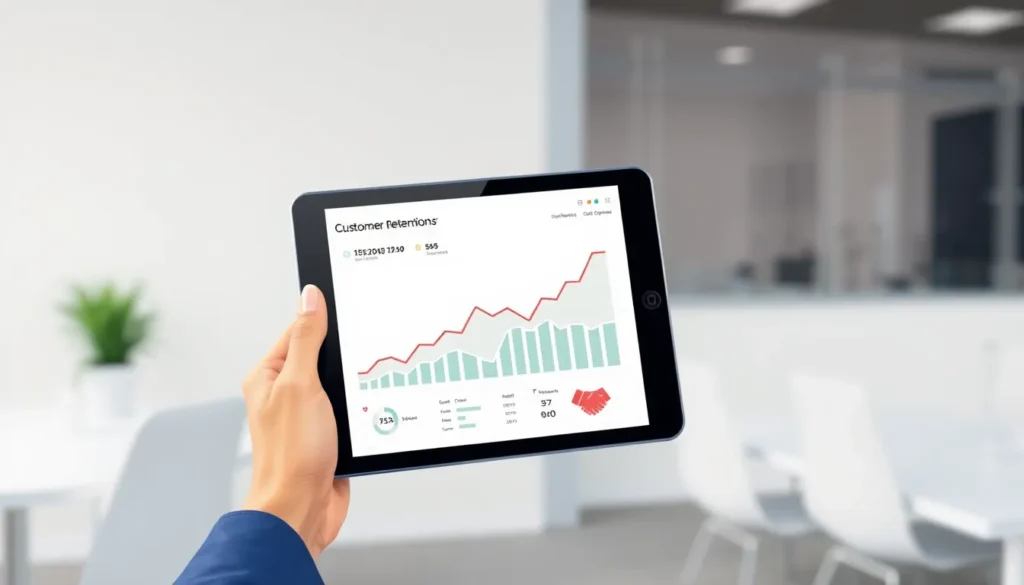
If you manage customer-facing operations, you know that acquiring new users is expensive and often unsustainable. This guide skips the generic advice about "being friendly" and instead breaks down the psychological and operational mechanics driving Churn. You will learn how to improve Customer Retention Rates by targeting specific, low-cost behavioral triggers rather than building complex technology stacks.
We focus on actionable interventions that directly impact Customer Lifetime Value (CLV). From refining Onboarding to establishing robust Feedback Loops, these strategies help you understand why customers stay. The goal is practical clarity: identifying the exact moments where loyalty is won or lost, then implementing simple fixes that scale without breaking your budget.
Understanding the Core Drivers of Customer Loyalty
When you ask yourself how to improve customer retention rates, start by stripping the concept down to its essence: a Customer Retention Rate measures the proportion of existing customers who continue to generate revenue over a given period. It is not merely a reflection of momentary happiness; it is the outcome of a customer’s calculation of ongoing value versus the perceived cost of switching.
Two layers shape that calculation. The first, transactional satisfaction, covers the immediate reaction to a single purchase—price, product quality, or service speed. While essential, it only prevents churn in the short term. The deeper layer, relational loyalty, is built when customers see a consistent, long‑term benefit that outweighs alternatives. This is where the perceived switching cost—time, effort, risk, or loss of accumulated benefits—becomes a decisive factor.
Psychology adds another lever: habit formation. Repeated positive interactions create cues and routines that make continued use feel automatic. When a product or service fits seamlessly into a customer’s daily workflow, the mental effort required to consider a competitor rises, reducing churn and boosting CLV. Recognizing these drivers lets you target interventions that reinforce value perception, raise switching barriers, and embed habit loops—foundations for lasting loyalty.
Optimizing the Onboarding Experience
Once the habit loops that drive loyalty are in place, the next decisive moment is the first 30 days. This window is where the Customer Retention Rate is most vulnerable because the experience is still forming a mental model of value; a stumble here spikes churn and compresses Customer Lifetime Value.
Onboarding is the highest‑leverage moment because it sets the time‑to‑value expectation. If users see tangible results quickly, the perceived cost of switching rises and the feedback loop begins to reinforce usage.
- Define a single, concrete outcome that can be achieved within the first week.
- Map the steps needed to reach that outcome, stripping away any optional actions that add complexity.
- Deliver micro‑wins at each milestone, using in‑app cues or short emails to celebrate progress.
- Provide instant help—live chat, searchable FAQs, or a guided tutorial that appears the moment a user hesitates.
Reduce friction by pre‑populating fields, allowing social sign‑ins, and avoiding mandatory configurations until after the core benefit is demonstrated. A streamlined setup lets the customer focus on the product’s promise rather than the process.
Finally, make the core benefits unmistakable: highlight the primary feature on the dashboard, use brief copy that ties the feature to the promised outcome, and repeat the value proposition in the first‑day welcome message. When the benefit is clear and the path is smooth, the onboarding experience becomes a catalyst for lasting retention.
Building Effective Feedback Loops
Once the Onboarding experience is solid, the next lever for How to Improve Customer Retention Rates is a well‑structured Feedback Loop. Active listening means reaching out for customers’ thoughts rather than waiting for them to surface in usage data. Passive data—such as login frequency, feature‑use logs, or error rates—shows what is happening, while active feedback—surveys, one‑on‑one interviews, and support tickets—reveals why it is happening.
To turn raw input into actionable insight, sort feedback into three buckets:
- Urgent issues: problems that cause immediate churn or block key actions.
- Opportunity gaps: requests that could boost Customer Lifetime Value if addressed.
- Validation points: praise or minor suggestions that confirm the product’s strengths.
After categorizing, assign owners, set timelines, and track progress in a shared board. Closing the loop is crucial: when a change is released, notify the originating customers, explain the decision, and invite them to reassess. This transparent cycle not only reduces churn but also reinforces the perception that the brand values each voice, directly lifting the Customer Retention Rate.
Personalizing Engagement Without Overwhelming
Personalization works best when it feels like a natural extension of the customer’s own journey, not a data‑driven intrusion. Respecting privacy means asking for consent at the right moments and using only the signals the customer has already shared.
Instead of grouping users by age or location alone, look at actions: frequency of purchases, product categories explored, and response to past offers. A behavior‑based segment might be “recent repeat buyers of premium items” or “infrequent users who abandoned a cart in the last 30 days.”
- Trigger a friendly check‑in email after a customer’s third purchase, highlighting related accessories they haven’t seen.
- Send a brief SMS reminder only to users who opted in and left a checkout page, offering a one‑time discount that expires in 24 hours.
- Provide a personalized dashboard notification for power users, showcasing new features that match their usage patterns.
These touchpoints stay relevant because they reference an action the customer already took, reducing the perception of being “watched.”
A “spray and pray” approach—mass emails, generic promotions, or frequent push notifications—quickly erodes trust. When messages feel irrelevant, unsubscribe rates climb and the Customer Retention Rate drops.
Keep the cadence low, test each segment’s response, and let the data guide you toward fewer, higher‑impact interactions that reinforce value without overwhelming the audience.
Measuring Success with the Right Metrics
To know whether those adjustments are working, you need reliable metrics that translate behavior into numbers you can act on.
- Customer Retention Rate (CRR): the percentage of existing customers who remain active over a given period. CRR = ((E − N) ÷ S) × 100, where E is the number of customers at period end, N is new customers acquired during the period, and S is the number at period start.
- Churn Rate: the flip side of retention, showing the share of customers lost. Churn = (L ÷ S) × 100, with L as customers who left during the period.
- Net Promoter Score (NPS): a single‑digit gauge of advocacy. Ask customers to rate “likelihood to recommend” on a 0‑10 scale; subtract the percentage of detractors (0‑6) from promoters (9‑10). The result ranges from –100 to 100.
Each KPI tells a different story: CRR shows overall stickiness, churn highlights loss points, and NPS reveals sentiment that often precedes churn.
Beyond aggregate figures, cohort analysis lets you track groups of customers who share a start date or acquisition channel. By plotting CRR or churn for each cohort over weeks or months, you can see whether a new onboarding tweak or feedback loop is truly extending lifespan, or if the effect fades after the first touchpoint.
Common Pitfalls That Undermine Retention Efforts
Even with robust cohort analysis, retention can slip when teams fall into a few common traps. Ignoring negative feedback creates a blind spot; every unresolved complaint is a hidden churn driver that never surfaces in the numbers. Over‑relying on discounts may boost short‑term Customer Retention Rate, but it trains customers to expect price cuts instead of value, inflating churn once the promotions end.
When product and support groups operate in separate silos, the customer experience fragments. A feature request may be logged by support but never reaches the product roadmap, while engineers release updates without understanding the pain points that triggered tickets in the first place. This misalignment erodes trust and accelerates churn.
- Listen actively to negative signals – route every complaint into a shared backlog and close the loop with the customer.
- Limit discount‑driven retention – pair price incentives with education or added features that reinforce the product’s core value.
- Break down silos – hold regular cross‑functional stand‑ups where support, product, and marketing review real‑time feedback and prioritize fixes together.
- Embed customer‑centric goals – tie individual performance metrics to CLV growth and churn reduction, not just sales targets.
By turning these habits into routine practices, the organization moves from reacting to churn to proactively extending the customer lifetime value.
